

Nestled in the fertile lands of Salukaya Village, Pamona Barat, Central Sulawesi, lies a thriving family-owned cacao plantation that has become a vital contributor to the region’s chocolate industry. Covering 20 hectares, this plantation is managed by four family members: Mr. Dewa, his mother, and two brothers. Together, they nurture over 10,000 cacao plants that not only sustain their livelihoods but also strengthen the local economy through consistent cacao production.
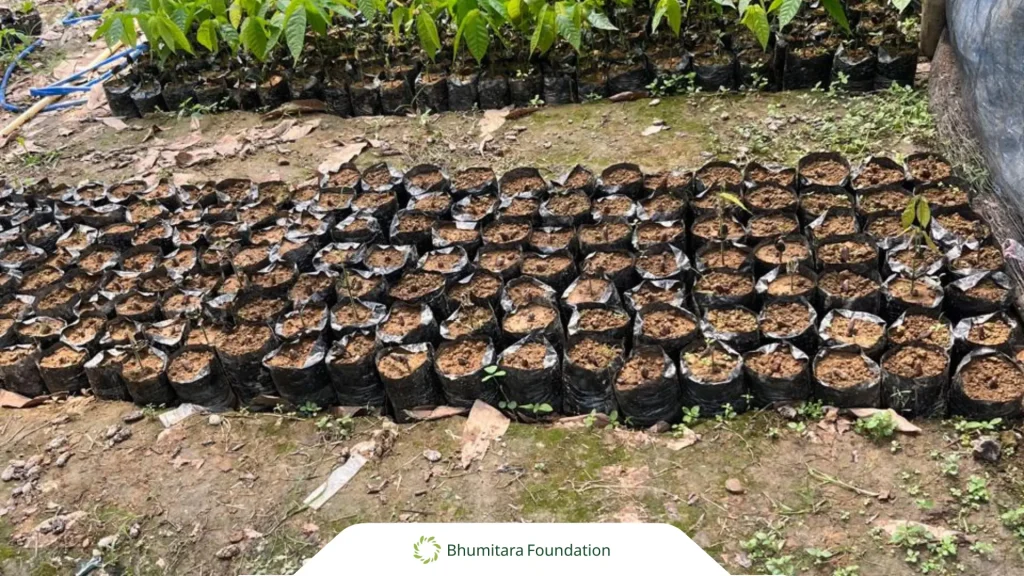
The plantation is home to several cacao varieties, with MCC02 as the dominant crop, supported by Sulawesi 2, BB01, and the newly planted ICCRI09. A small number of local varieties add to the diversity of the plantation. Most seedlings are sourced from cacao farmers in Luwuk Timur, South Sulawesi, with each costing around IDR 10,000–15,000. This careful selection ensures the plantation continues to grow with high-quality, productive plants.
Within Mr. Dewa’s eight hectares, the cacao is divided between two hectares of young MCC02 trees just two years old and six hectares of older mixed varieties, averaging seven years in age. His mother manages an additional five hectares, while his brothers each maintain 3.5 hectares. These combined efforts produce impressive harvests that peak twice a year, in April and November. During each season, the plantation yields about 10 tons of dried beans from their most productive lands, translating to an annual output of approximately 20 tons.
Once harvested, the beans are sold as dried, unfermented cacao directly to brokers. These brokers then channel the beans to major warehouses such as JB Cacao and Cargill. While prices are tied to the global market, local farmers often face challenges as their selling price is usually IDR 12,000–15,000 lower than the international standard. Moreover, brokers purchase beans from farmers at an additional IDR 2,000 lower than warehouse prices, which further reduces profit margins.
Like many cacao plantations in Indonesia, the family also contends with pests and diseases, particularly stem borer disease (Upasia salmonicolor) and the cacao pod borer (Conopomorpha cramerella). To combat these threats, they apply fungicide paste to the pods, a practice that helps safeguard production despite the ongoing challenges.
The story of this plantation in Salukaya Village reflects not only the resilience of small-scale farmers but also the vital role they play in sustaining the cacao industry in Central Sulawesi. With dedication, family collaboration, and traditional farming knowledge, they continue to produce the beans that ultimately bring joy to chocolate lovers worldwide.